

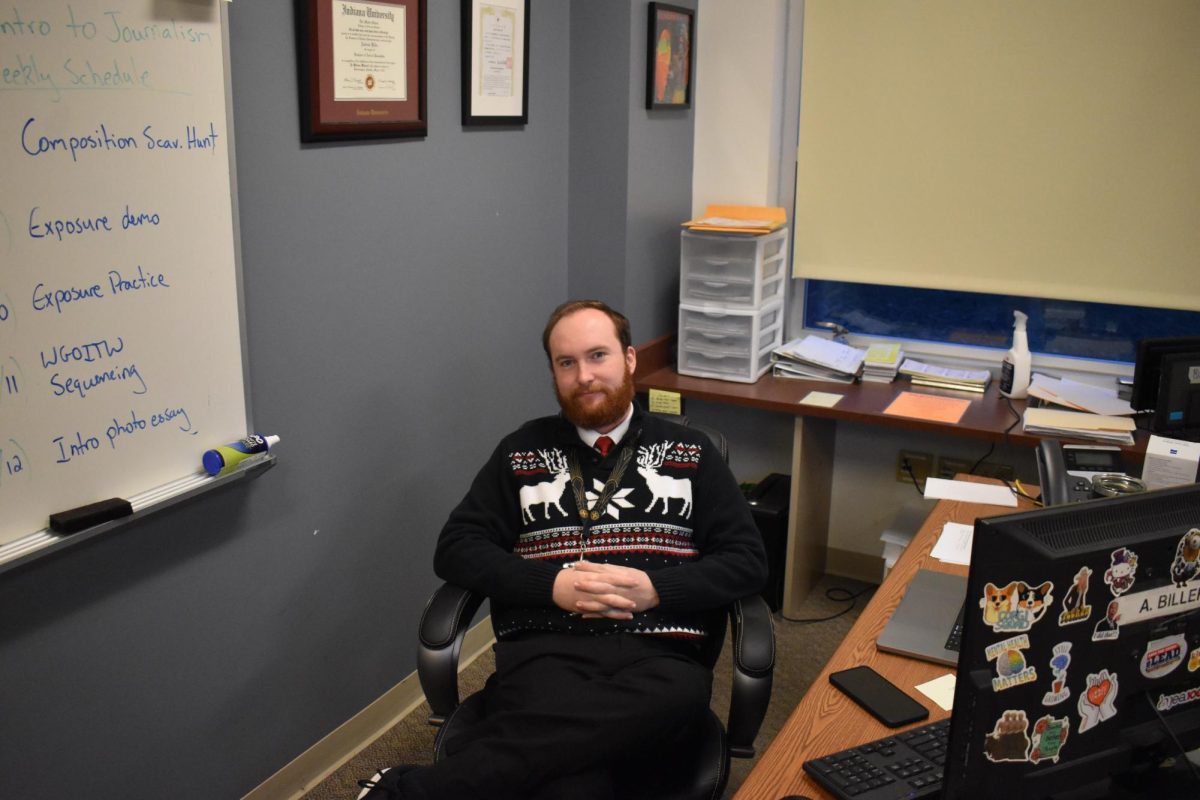




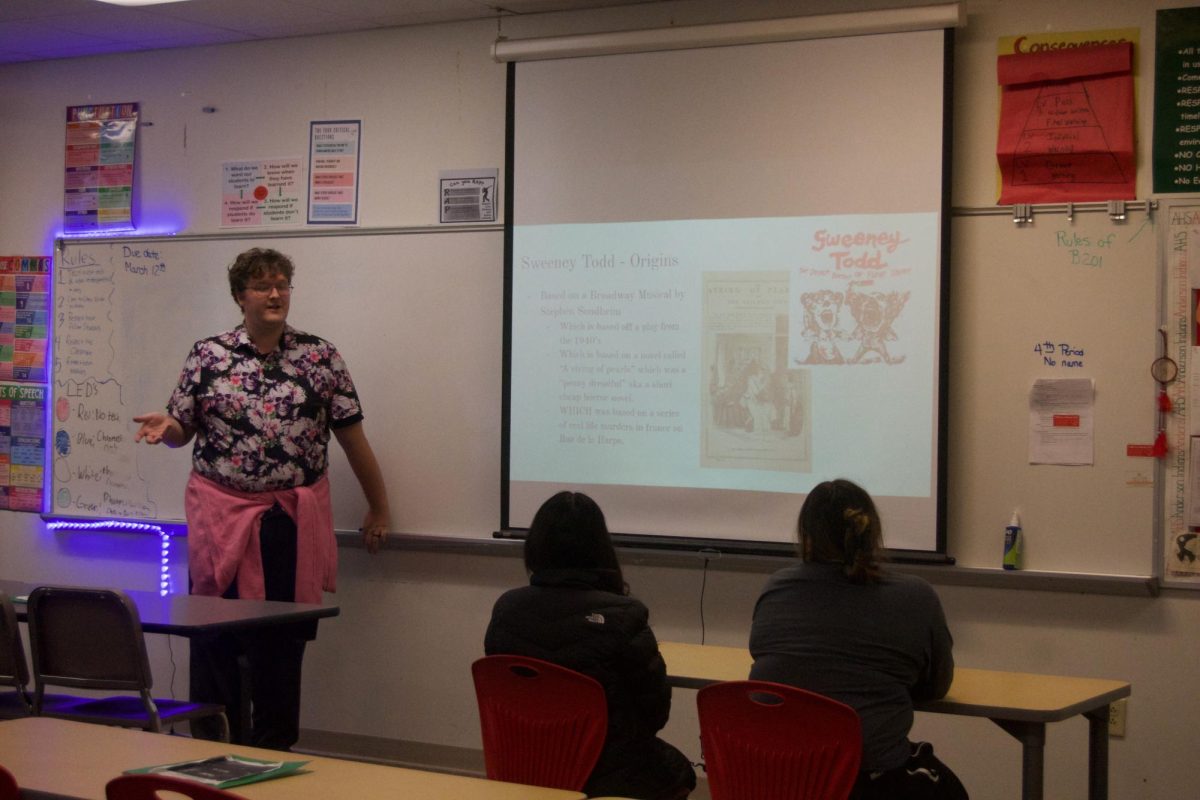



A few years ago, social studies teacher Urik York was asked to be the ambassador of a new club for students to play one of their favorite role playing games and arguably the most popular role playing game of all time, Dungeons and Dragons.
D&D (short for Dungeons and Dragons) is a table-top roleplaying fantasy game that has been around since the late 1970s and has built an enormous community of dungeon masters and dens/crawlers over the years, earning more than $1 billion in revenue in October 2024, and getting new expansion packs, books, movies, and more.
How DND works is according to the D&D handbook on DNDBeyond.com, there are three main pillars to understand. “The three main pillars of D&D play are social interaction, exploration, and combat.” There are typically two roles in the game. The player, also known as Dens and Crawlers.The players can be whatever you want them to be as long as it fits in the world and the limitations of the story that was created. Which brings up the other role, dungeon masters. The creators of the stories and your guide through their world. There are also the basic patterns to understand the game. The dungeon master tells you a scenario and asks you a question, the player responds with a detailed answer like “I cast fireball,” or “I walk on the left pathway instead of the right,” and roll a die to decide how well it works out for you, and then the dungeon master tells you the consequences for you decision based on the dice roll.
D&D isn’t just a game however, it is also a fandom. A community full of people who have the same interest while also having their own perspective about it. Sometimes it’s not even about the game that makes the experience so fun for them, it’s the people who they interact with. A good example of this is from Harmony Terrell who says, “Sometimes we don’t have our next story thought out perfectly so we, as a group, play a different game together.”
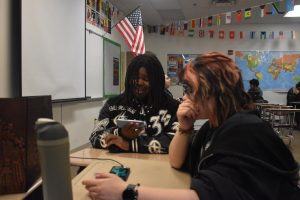
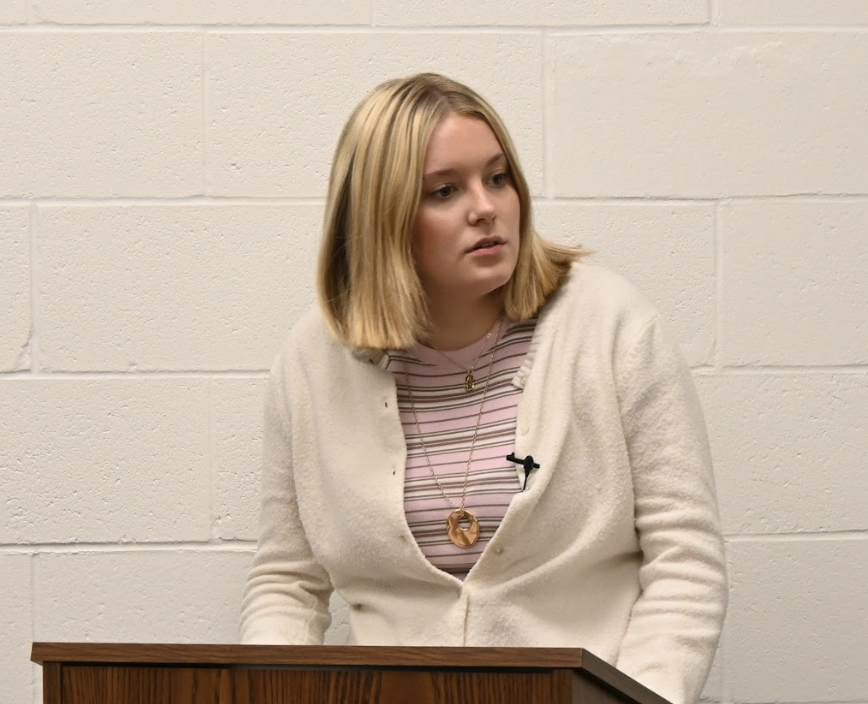
Terrell is the President of the Art club and one of the presidents and founders of the D&D club. Terrell describes the position of president as a “loose” term and describes it as something she says to make it easier to converse about the club and how it works.
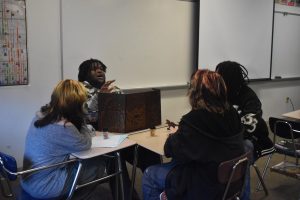
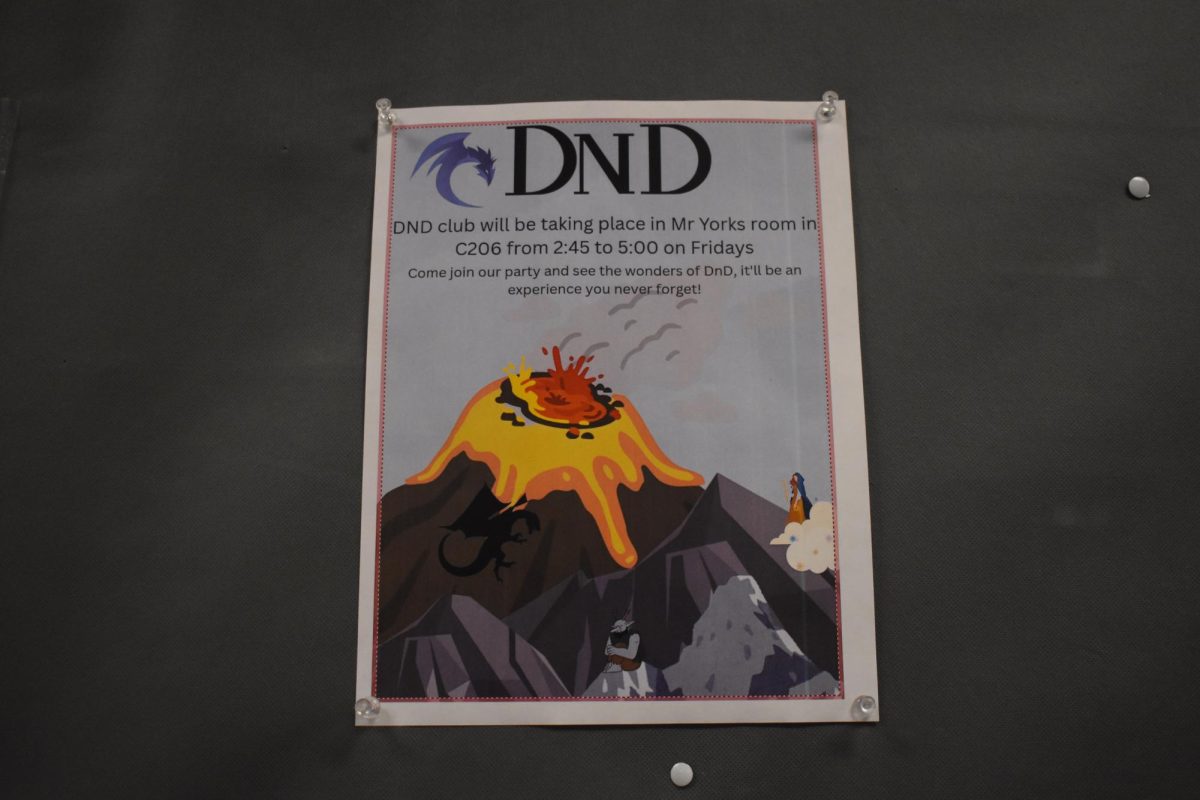
How the club works is that every Friday from 2:45-4:30 the club members or anyone who wants to show up, go to room C206, get with the group they play D&D with, and discuss the game. How they discuss it is up to them based on if they are working on a new game, if all the players are there, or if new players are wanting to play along.
Terrell has been a part of the club since it first started back around 2nd quarter of 2023. However, she played D&D a year prior to joining the club. Because of how long she has been a part of the club Terrell has seen many people join the club and find a sense of community and belonging. “It’s good to feel like you can let loose and nerd out or just be yourself or be someone else when you’re role playing and playing games,” Terrell said. The club and D&D as a whole can be seen as a way to cope with trauma, others see it as a way to deal with stress, but for Terrell it just depends on the day. She states, “If the day has been stressful then I’ll just go home.” When she does want to play D&D she describes it as a way to turn off her brain and enjoy the moment. “It’s nice to see my friends who I haven’t seen in a while and I just need to not think sometimes and to just explore the world we are creating and have fun with my friends.” For her it can be a good way to relax but when she’s too stressed she doesn’t want to bring that energy into a game that is supposed to get your adrenaline running. She describes D&D as “both hand in hand” meaning it can be fun and it can be stressful. It just depends on the day.
Senior D’Meris Kelley has been a part of the club for a year but he has been playing a little longer than that. “When I first started playing D&D a year ago it was a fantastic experience.” He later adds, “I was over at my friend’s house and he had made an entire campaign based off of Old Norse mythology, like from the Pros Edda (it’s the most significant source for Norse mythology and is used as a handbook for poets to understand the ancient verse).” Kelley is a huge mythology and theology fan so it really was something that very much pleased him.
D&D is a great way for him to experience different worlds and possibilities, to feel a way he hasn’t felt before. “It really showed me a lot of the freedom D&D has because it was a game that allowed me to express my interest and my knowledge on stuff that I’m interested in.” Because of how much freedom D&D offers when it comes to creating your own story, Kelley was able to create worlds with IP’s [Intellectual Property] such as DC comics and made a story-line based on the New 52 universe/comic book run.

He describes the feeling of exploring new worlds as a player as, “A way you get to step outside of yourself, escape that reality [the real world] and go into a different one where you’re whatever character you wanted to play as, the one you wanted to make, and be the one that makes you feel joy.” He describes the feeling of being the Dungeon master as, “Stepping out of your own life and into one you are the master of the world you’ve made and the people that are in it. You have the sort of freedom and control over things in the game that you may not have in normal life.” He had no further comments.
18-year-old senior Serenity Magee has been playing D&D since she was 12 years old and she is one of the other founders of the club. She is considered by Terrell and Kelley as the main president of the club. She does show choir so she isn’t as involved with the club as she use to be but she still loves D&D and what it did for her. “D&D is like an escape for me. It really helps me to relax. It’s also a lot of fun,” Magee said. She was bullied in middle school for being weird so for her D&D was her way of finding people with the same interests as her and being herself. It’s also a hobby she can play with her family. Magee states, “It’s usually chaotic [playing with her family. Whenever things go wrong in the campaign, my sister will get really mad and freak out.” That’s not to say she doesn’t enjoy playing with her family. She actually finds it funny.
While D&D club and the game as a whole has a lot to offer, one common thread they are believe and share is the factor of community. All three of them feel accepted by this community for being what others considered weird, different, and an outcast. Magee’s response on how she feels about the community the club can bring is, “I love it because’s just a bunch of ‘weird kids’ or people who feel like outcasts can come together and have fun and play games,” Kelley states, “There are some times where people get into things or get into different clubs or communities where their lack of seniority becomes an issue. But in the D&D club, the less you know the better you can be with D&D because you can be able to build up on that, be able to let the game consume you and be enamored by it.” Terrell’s response is, “I love that we bring that (a community for people) to school and make it a safe space for people.”
They all want the club to keep growing and show people the exact emotion. that the game brought to them and give a whole new generation that same experience. As Terrell says it best, “Most of us (her and most of the club members) started off as freshmen and now that we are seniors and see a bunch of new students it feels great that we can pass on the door to someone else.”